
July 8, 20266 min read

Reviewed by Malcolm Reid Sr
Founder, President & CEO of ProGlobal Business Advisors
TL;DR
Buyers are more skeptical because anyone can look credible online, and polish no longer proves competence. What signals real credibility now is verifiable evidence: a track record you can check, named people behind the business, references you can call, and plain talk about limits. Honest firms win by being easy to verify.
Why buyers stopped trusting the pitch
Two things changed at once. The tools to look credible got cheap, and buyers noticed. A polished website, a confident brand and a wall of five-star reviews used to signal a serious business. Now anyone can assemble all three in a weekend, and everyone knows it. The result is a buyer who has learned to discount presentation entirely.
This hits the coaching and advisory world harder than most, because the field is unregulated and crowded with people who market well and deliver little. Buyers have been burned, or know someone who has, and they arrive expecting to be sold to. Skepticism is now the default, not the exception.
What actually signals credibility now
Polish no longer proves anything, so buyers have moved to signals that are harder to fake. In practice, credibility now comes from evidence a buyer can check for themselves:
- A verifiable track record — real work, real time in business, specifics that can be confirmed rather than claimed.
- Named people behind the business, with histories a buyer can look up, not a faceless brand.
- References a buyer can actually contact, not curated testimonials.
- Transparency about price, scope and limits — including what you do not do and who you are not for.
- Straight talk instead of guarantees. Specific, defensible claims read as more credible than bold ones.
In a world where anyone can look credible, the only durable advantage is being genuinely easy to verify.
How honest firms win
The counterintuitive part is that rising skepticism favours the honest. When buyers assume everyone is overselling, the firm that plainly states its limits stands out precisely because it breaks the pattern. Admitting what you cannot do makes what you can do believable. Naming who you are not a fit for makes the fit you claim credible.
None of this is a tactic to be performed. Buyers can tell the difference between transparency and a transparency campaign. The firms that win the credibility question are the ones that were already built to be checked — verifiable history, reachable references, clear scope — and simply let buyers do the checking.
What this means in practice
- Make your track record checkable. Say how long, at what scale, with what kind of work, in terms a buyer can verify.
- Put real people forward. A named advisor with a history beats a brand with none.
- Offer references before they are asked for. Volunteering them signals you expect scrutiny.
- State your limits plainly. What you do not do is as clarifying as what you do.
- Replace guarantees with specifics. A precise, defensible claim outperforms a bold, unprovable one.
Why are customers more skeptical than they used to be?
Because the signals that used to prove credibility — a slick site, strong branding, glowing reviews — are now cheap and easy to fake. Buyers have learned to discount presentation and look instead for evidence they can verify independently.
How can a small business prove it is trustworthy?
Make yourself easy to verify. Show a checkable track record, put named people with real histories forward, offer contactable references, and be transparent about price, scope and limits. Verifiable beats impressive.
Do online reviews still build trust?
Less than they did. Buyers know reviews can be bought or curated, so a wall of five stars now reads as neutral at best. References a buyer can contact and a track record they can confirm carry far more weight.
Key takeaways
- Polish is cheap now, so buyers discount presentation and look for proof.
- Credibility comes from a verifiable track record, named people, and real references.
- Skepticism favours honest firms — stating limits makes claims believable.
- Build to be checked, then let buyers check.
About the author
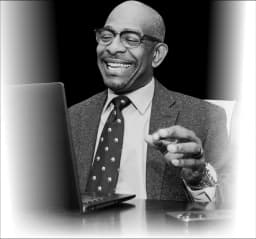
Malcolm Reid Sr
Founder, President & CEO of ProGlobal Business Advisors
Malcolm Reid Sr is the founder, President and CEO of ProGlobal Business Advisors. Before founding the firm he spent more than 25 years in operating leadership, and by his own account generated over $1 billion in sales across the companies he led. He now advises business owners and trains the advisors who do this work.
- 25+ years in business and sales leadership
- $1B+ in sales generated across companies led (career total)
- Founder of ProGlobal Business Advisors, Columbia, Maryland